
Publication Ethics and Statement on Publication Misconduct
Editorial Decision-Making
Editorial decisions in JBSE are based on a standardized and transparent process. Journal policy forms an integral part of this process. One essential criterion is the alignment of a submitted manuscript with the journal’s scope, which is assessed in accordance with COPE guidelines. Submissions must be free from defamation, copyright infringement, and plagiarism. Reviewer comments constitute another key element of the decision-making process. The final editorial decision for each manuscript is made based on these combined assessments.
Confidentiality
JBSE is committed to safeguarding all information associated with submitted manuscripts from unauthorized access. In this regard, only editorial board members and advisors are permitted to access manuscript information.
Identification and Handling of Research Misconduct
The publisher and editors take all reasonable measures to identify and prevent the publication of papers involving research misconduct, including plagiarism, citation manipulation, data fabrication or falsification, and other unethical practices. Under no circumstances will the journal or editors encourage or knowingly permit such misconduct. If the publisher or editors are informed of allegations of misconduct concerning a published article, they will follow COPE guidelines in addressing the issue.
Revenue Sources, Advertising, and Direct Marketing
JBSE is financially supported by Ton Duc Thang University, Ho Chi Minh City, Vietnam, and has no additional funding sources. JBSE does not accept advertisements on its official website.
Publication Schedule and Archiving
JBSE publishes four issues per year, supplemented occasionally by special issues. The journal ensures long-term preservation of published content through the CLOCKSS archive and the INSPIRE Library of Ton Duc Thang University.
Author Responsibility Policies
Authorship
All submitted manuscripts must be approved by all authors prior to submission. Authors are responsible for designing and preparing the full content of the manuscript. ALL authors must thoroughly review the manuscript and approve the final submitted version. Authors are accountable for the accuracy of the manuscript’s content and must sign an authorship agreement confirming their contributions. A manuscript will only be considered for publication with the explicit consent of all contributing authors.
Originality and Plagiarism
Authors must correctly acknowledge the work of others, including their own previously published work incorporated into the study. During the initial screening process, manuscripts are checked for plagiarism using iThenticate (Turnitin, USA). If editors or reviewers detect substantial similarity with previously published content, authors may be requested to revise and provide additional references. Manuscripts with extensive plagiarism will be immediately rejected. Details on plagiarism screening can be found here.
Data Access and Retention
Authors may be asked to provide raw data related to the manuscript for editorial review and should be prepared to grant public access to such data when appropriate.
Multiple, Redundant, or Concurrent Publication
Authors must not submit a manuscript that is under consideration by another journal. Concurrent submission constitutes unethical publishing behavior.
Acknowledgment of Sources
All sources that significantly influence the nature of the submitted work must be cited appropriately.
Disclosure and Conflicts of Interest
In the acknowledgment section, authors must disclose all sources of financial support and any potential conflicts of interest, such as consulting fees, stock ownership, or patent licenses. Contributors who assisted but do not meet authorship criteria should also be recognized.
Fundamental Errors in Published Works
If an author discovers a significant error or inaccuracy in their published work, they must promptly notify the journal editor or publisher and cooperate in retracting or correcting the article.
Reporting Standards
Authors of original research should present accurate accounts of the work performed and provide an objective discussion of its significance.
Hazards and Use of Human or Animal Subjects
Statements of compliance are required when the study involves chemicals, procedures, or equipment with unusual hazards, or when the research involves human or animal subjects.
Use of Patient Images or Case Details
Studies involving patients or volunteers must obtain approval from the relevant ethics committee and secure informed consent, which must be documented in the manuscript.
Peer Review Policy
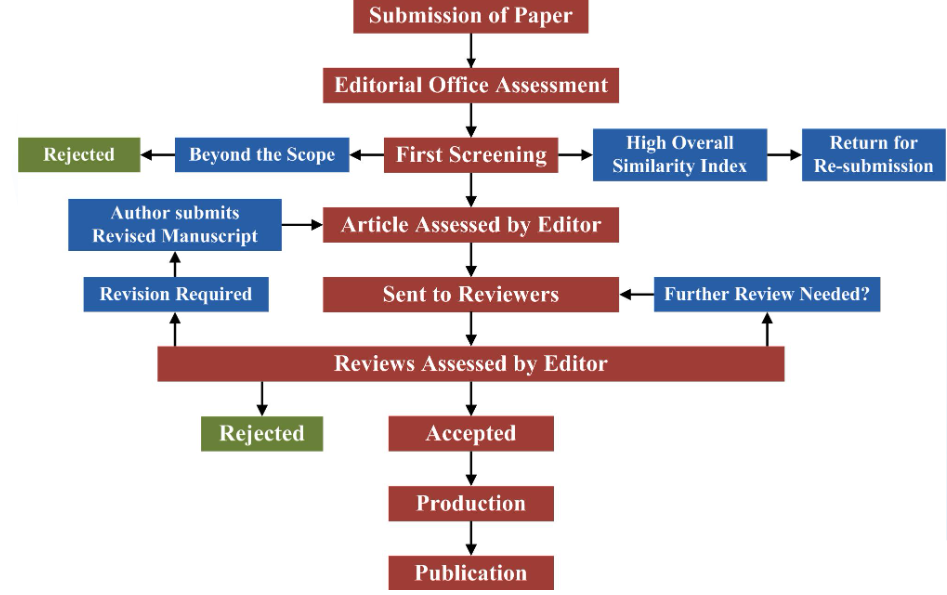
JBSE is a peer-reviewed open-access journal committed to upholding international publishing standards. The journal ensures integrity in the review process and maintains the highest peer-review standards. After the editorial suitability check, each manuscript undergoes a double-anonymized peer-review process by independent expert reviewers.
Reviewer Responsibilities
Contribution to Editorial Decisions
Reviewers play a vital role in assisting editors with publication decisions and may help authors improve their manuscripts through constructive feedback.
Promptness
Any reviewer who feels unqualified to assess the manuscript, or who knows that a timely review will not be possible, should immediately notify the editor and decline the review invitation.
Confidentiality
All manuscripts received for review must be treated as confidential documents. They must not be shown to or discussed with others unless authorized by the editor.
Objectivity Standards
Reviews should be conducted objectively. Personal criticism of authors is inappropriate. Reviewers should express their views clearly and support them with sound arguments.
Review Process Flowchart
(A flowchart of the review process is typically provided here).